
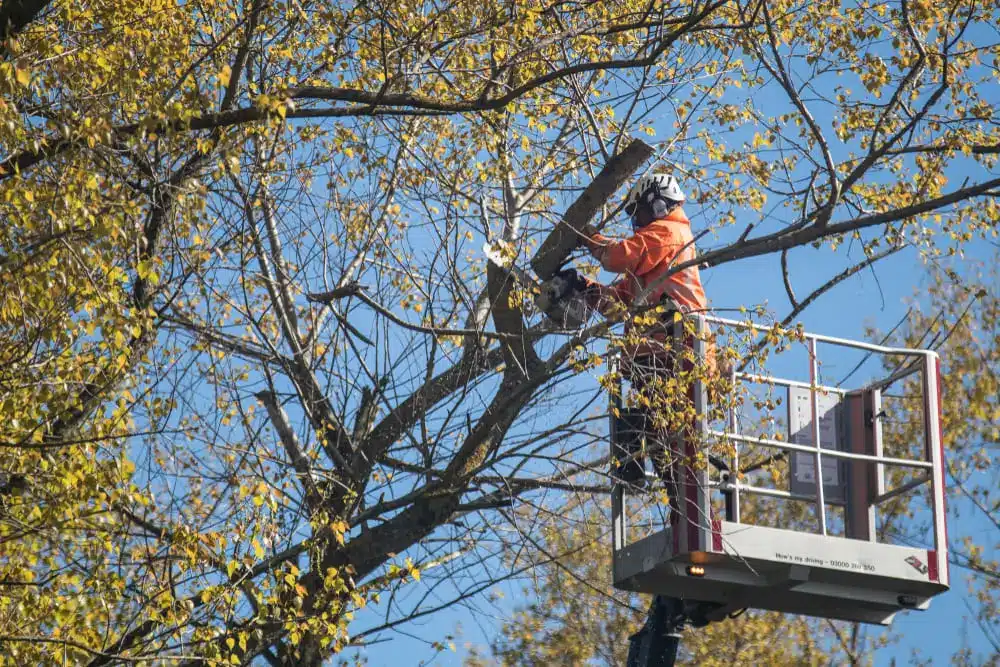
When it comes to forestry operations, selecting the appropriate boom lift can make the difference between a successful project and costly complications. Whether you’re managing tree trimming, vegetation control, or forest maintenance, the right equipment ensures both safety and efficiency in challenging outdoor environments. Understanding the specific requirements of forestry work and matching them with the correct boom lift specifications is crucial for professionals in arboriculture and land management.
Understanding forestry-specific boom lift requirements
Forestry operations present unique challenges that standard boom lifts may not handle effectively. Rough terrain is perhaps the most significant factor to consider when choosing equipment for forest work. Unlike construction sites with relatively flat surfaces, forestry environments feature uneven ground, slopes, and obstacles that require specialized capabilities.
The working height requirements in forestry can vary dramatically depending on the project scope. Tree trimming operations might need reach capabilities of 40 to 100 feet, while some forest maintenance tasks require even greater heights. Additionally, the horizontal outreach becomes critical when workers need to access areas beyond the base of trees or navigate around dense vegetation.
Environmental factors also play a crucial role in equipment selection. Forestry boom lifts must withstand exposure to branches, debris, and varying weather conditions. The equipment should feature robust construction with protective guards and reinforced components to handle the demanding nature of outdoor forest work.
Key features for effective boom lift selection in forestry
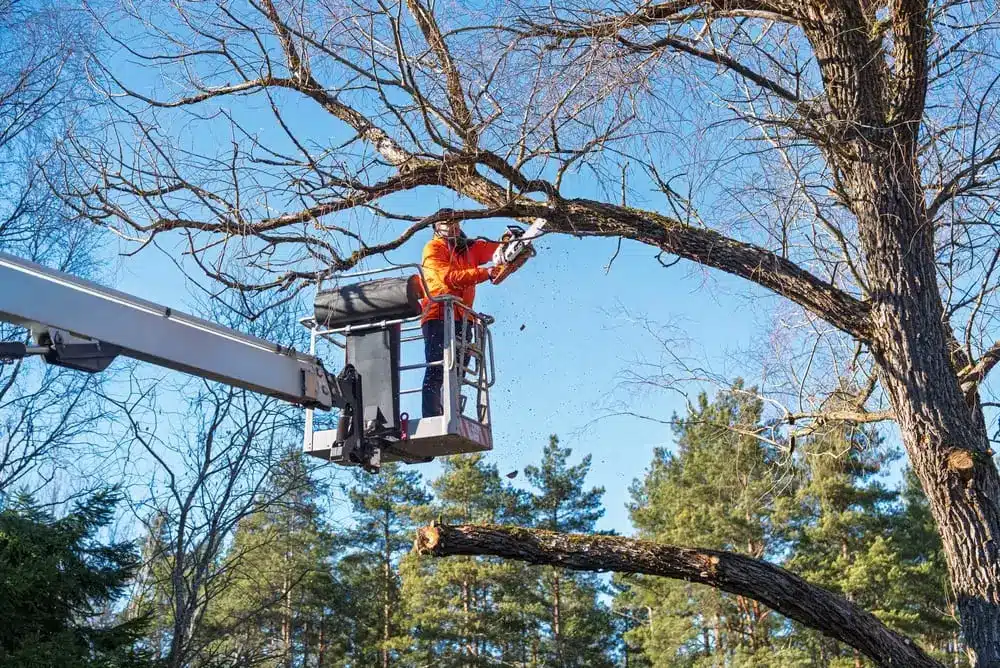
Several essential features distinguish forestry-grade boom lifts from standard models. All-terrain capability stands as the most important characteristic, with features like four-wheel drive, oscillating axles, and high ground clearance enabling operation on challenging surfaces.
Reach and flexibility represent another critical consideration. Articulating boom lifts offer superior maneuverability around obstacles compared to straight telescopic models, making them ideal for working around tree branches and dense vegetation. The platform capacity must accommodate not only workers but also their tools and equipment, typically ranging from 500 to 1,000 pounds for forestry applications.
Safety systems specific to forestry work include enhanced stability monitoring, boom and platform protection against branch contact, and emergency descent capabilities. Many forestry boom lifts also feature auxiliary power options to operate chainsaws and other tools directly from the platform, improving efficiency and reducing the need for additional equipment.
- Reinforced boom construction to resist branch damage
- Enhanced traction systems for steep terrain navigation
- Extended fuel capacity for long operational periods
- Improved visibility features for operator awareness
Comparing boom lift types for different forestry applications
Different forestry tasks require specific boom lift configurations to achieve optimal results. Articulating boom lifts excel in tree trimming and selective cutting operations where precision and maneuverability around branches are essential. Their jointed arm design allows operators to position themselves precisely while maintaining a safe distance from hazardous areas.
Telescopic boom lifts prove more suitable for straight-line access applications such as power line clearance or reaching the tops of tall trees. These units offer greater working heights and can extend directly upward with minimal setup time, making them efficient for repetitive tasks across large areas.
For challenging terrain operations, track-mounted boom lifts provide superior stability and mobility compared to wheeled versions. The tracked configuration distributes weight more evenly, reducing ground pressure and enabling operation on soft or uneven surfaces common in forest environments.
Spider lifts represent a specialized category particularly valuable for forestry work in confined spaces or environmentally sensitive areas. These compact units can navigate between trees and access locations where larger equipment cannot operate, though they typically offer more limited reach capabilities.
Safety considerations and operational best practices
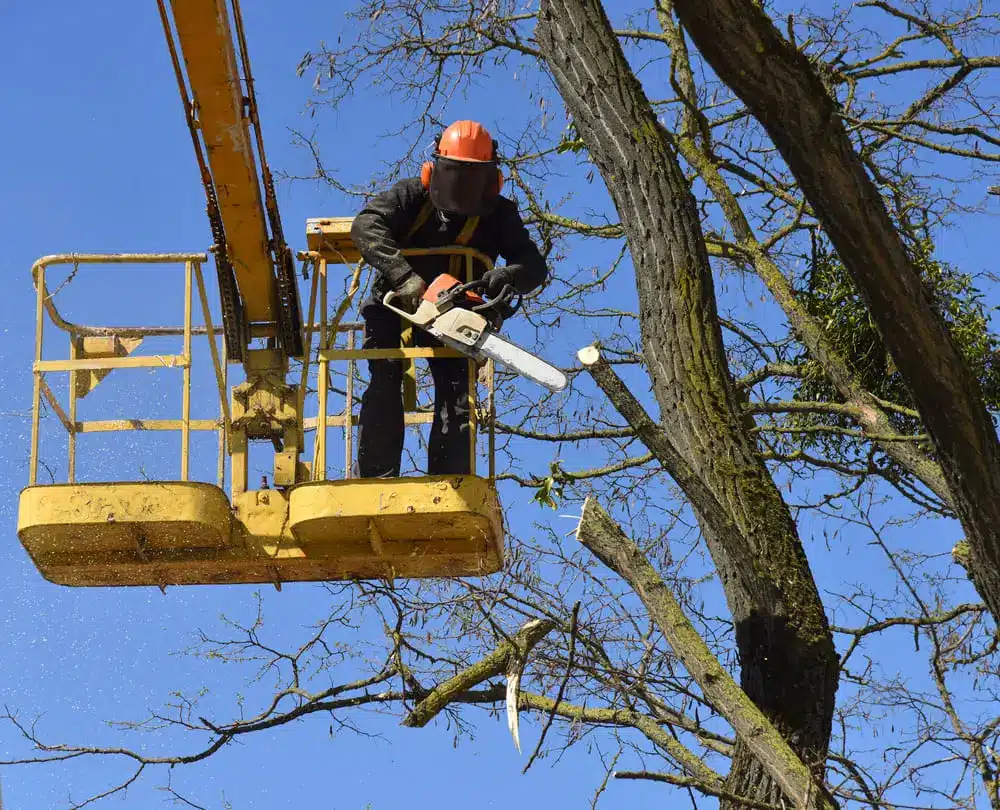
Safety remains paramount in forestry boom lift operations due to the inherent risks of working at height in unpredictable environments. Pre-operation inspections become even more critical in forestry settings, where equipment faces exposure to debris, branches, and challenging weather conditions that can affect performance.
Operator training specific to forestry applications should cover hazard identification, including overhead power lines, unstable trees, and ground conditions that could affect equipment stability. Understanding the dynamic loading that occurs when cutting branches or removing vegetation helps prevent accidents and equipment damage.
Weather monitoring plays a crucial role in forestry boom lift safety. Wind conditions can significantly impact stability, especially when working at height with extended reach. Establishing clear protocols for weather-related work cessation protects both operators and equipment from unnecessary risks.
Regular maintenance schedules must account for the harsh operating environment of forestry work. Increased inspection intervals and protective treatments help ensure reliable performance and extend equipment life despite exposure to challenging conditions.
Cost factors and return on investment
Evaluating the total cost of ownership for forestry boom lifts requires considering factors beyond the initial purchase price. Operational efficiency gains from properly matched equipment can significantly impact project profitability through reduced labor costs and improved productivity.
Fuel consumption becomes particularly important for forestry operations that often involve extended working periods in remote locations. More efficient engines and optimized hydraulic systems can result in substantial cost savings over the equipment’s operational life.
Maintenance costs vary significantly between different boom lift types and manufacturers. Equipment designed specifically for forestry applications may command higher initial prices but often provide better long-term value through reduced repair needs and longer service intervals.
Rental versus purchase decisions depend largely on utilization rates and project duration. For occasional forestry work, rental arrangements may prove more cost-effective, while organizations with consistent forestry operations typically benefit from equipment ownership.
Selecting the right boom lift for forestry operations requires careful consideration of terrain challenges, safety requirements, and operational efficiency needs. The investment in properly specified equipment pays dividends through improved productivity, enhanced safety, and reduced operational costs. For expert guidance on choosing the ideal boom lift for your specific forestry applications, contact our specialists who can help match your requirements with the most suitable equipment solutions available in today’s market.