
In the forestry maintenance and vegetation management sector, choosing between boom lifts and cherry pickers can determine the efficiency and safety of your operations. These two types of lifting equipment offer distinct advantages depending on working conditions and the specific requirements of each forestry project. Understanding their fundamental differences will help you make informed decisions and optimize your equipment investments.
Definitions and technical characteristics of boom lifts
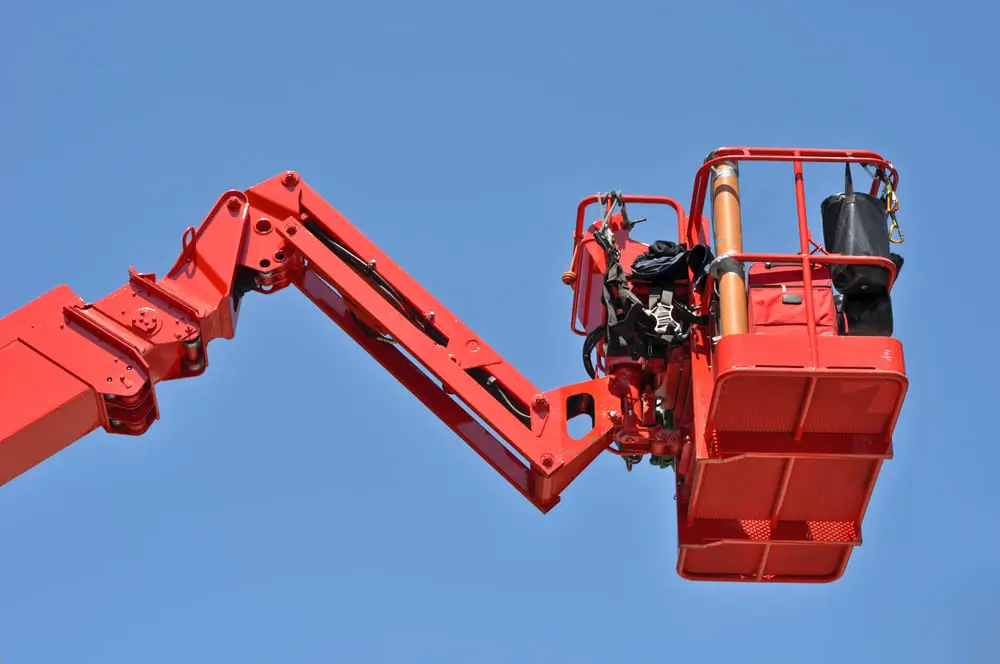
Boom lifts, also known as articulated aerial platforms, are distinguished by their articulated telescopic arm, which provides exceptional flexibility in complex forest environments. This design allows operators to reach difficult areas while maneuvering around natural obstacles such as dense branches or rocks.
The load capacity of boom lifts generally ranges between 200 and 500 kg, with working heights reaching from 20 to 45 meters depending on the model. Their robust hydraulic system ensures optimal stability even on uneven terrain, a crucial feature for pruning and forestry maintenance tasks.
- Extended horizontal reach thanks to the articulated arm
- Full platform rotation (360°)
- All-terrain chassis adapted to forest ground conditions
- Proportional controls for increased precision
Specific features and advantages of cherry pickers in forestry
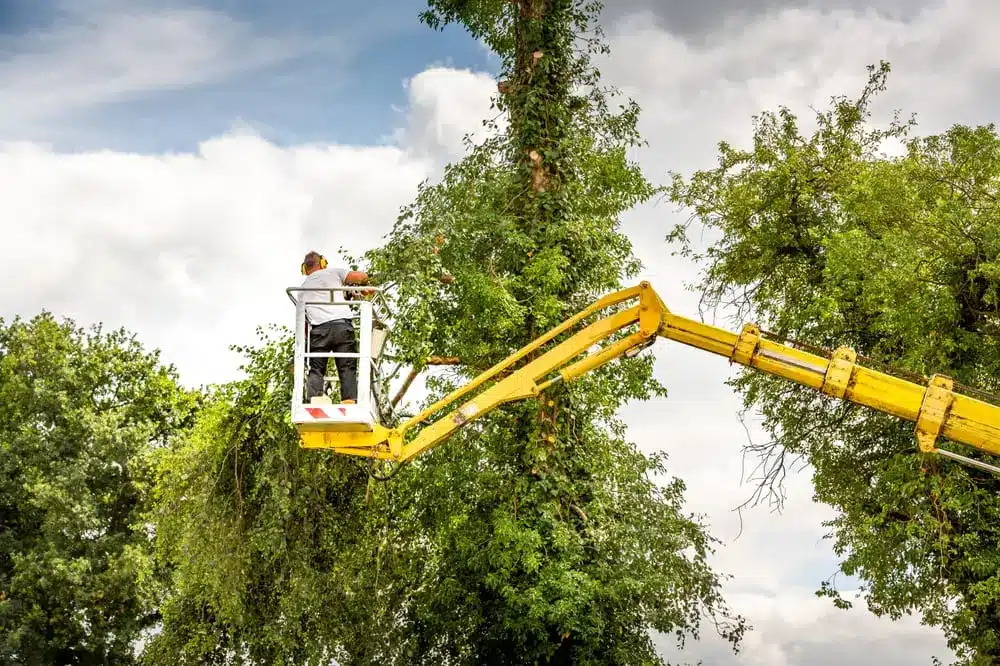
Cherry pickers, also called scissor lifts, operate using a different principle with their vertical lifting mechanism. This design makes them particularly effective for tasks requiring direct vertical access above the work area, such as canopy pruning or maintenance of power lines along forest edges.
Their spacious platform can accommodate multiple operators and tools, improving team productivity. The inherent stability of the scissor system provides a secure working base for precision operations over extended periods.
Modern cherry pickers incorporate advanced safety systems including overload sensors, wind alarms, and anti-tip protection systems. These features are essential for high-elevation operations in forest environments where weather conditions can change rapidly.
Specialized applications of cherry pickers
Cherry pickers are particularly suited for vertical brush clearing operations, harvesting fruit at height in forest orchards, and interventions on infrastructure located along forest edges. Their design prioritizes vertical stability rather than positioning flexibility.
Criteria for choosing between boom lifts and cherry pickers for your projects
The selection between these two technologies mainly depends on the terrain and the type of tasks to be performed. Boom lifts excel in dense forest environments where maneuverability is essential, while cherry pickers are better suited for open spaces requiring strong vertical stability.
Economic considerations also play a key role. Boom lifts generally represent a higher initial investment, but their versatility may justify this cost over the long term. Cherry pickers offer a more affordable acquisition cost and usually lower maintenance expenses.
- Available budget and total cost of ownership
- Frequency of use and variety of applications
- Technical skills of operators
- Logistical constraints related to transport and storage
Comparative analysis of operational performance
In terms of productivity, boom lifts generally allow larger areas to be handled thanks to their extended reach and ability to maneuver around obstacles. Cherry pickers, on the other hand, improve effective working time thanks to their stable platform, which reduces operator fatigue.
Safety considerations and regulatory compliance
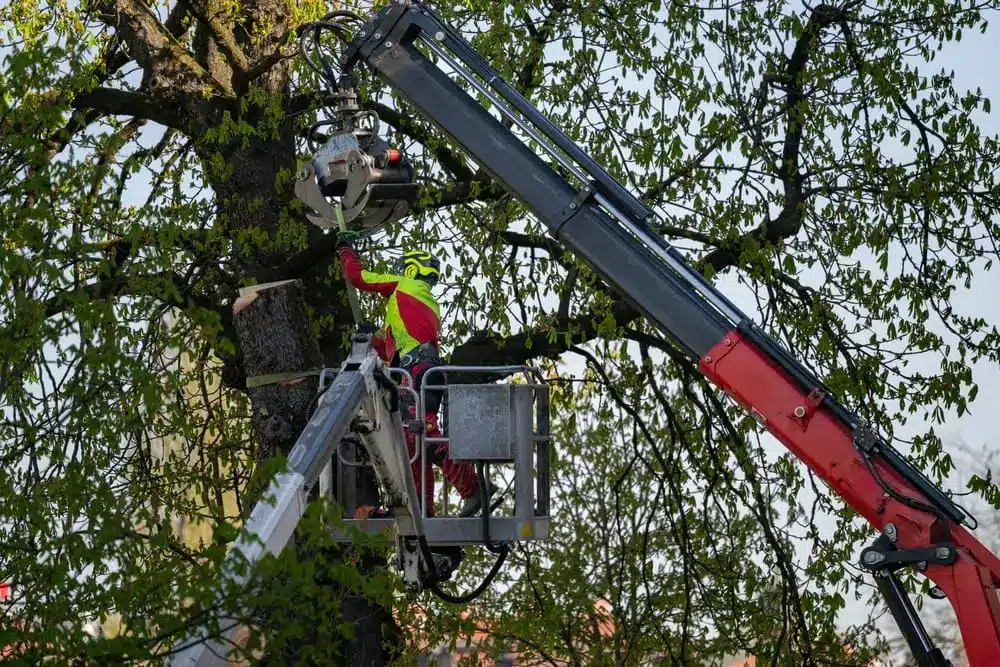
Safety is a major factor when choosing between boom lifts and cherry pickers. Current regulations require specific training for each type of equipment, with distinct certifications depending on the forestry applications involved.
Boom lifts require particular attention to tipping risks due to their variable center of gravity, while cherry pickers present specific risks related to the scissor mechanism and structural stress during maximum extension.
Preventive maintenance also differs between these two technologies. Boom lifts require more frequent monitoring of their hydraulic components and articulations, while cherry pickers require closer inspection of their scissor system and vertical guide mechanisms.
Technological trends and future developments
The forestry industry is rapidly evolving toward more environmentally friendly solutions. New models of boom lifts and cherry pickers increasingly incorporate electric or hybrid power systems, reducing the carbon footprint of forestry operations.
Advanced telemetry systems now enable real-time monitoring of equipment performance and condition, improving maintenance planning and extending the operational lifespan of machines.
Artificial intelligence is also beginning to appear with driver-assistance systems that analyze the forest environment to suggest optimal trajectories and prevent dangerous situations.
Ultimately, choosing between boom lifts and cherry pickers depends on your specific forestry and vegetation management needs. To receive personalized advice and discover our full range of equipment designed for forestry projects, contact our experts today through our website ForestBoomLifts.com.